When you think about scuba diving, usually the first image that comes to mind is diving in warm tropical waters, hovering over coral reefs. But have you considered there might be an even more colourful dive site out there, teaming with life?
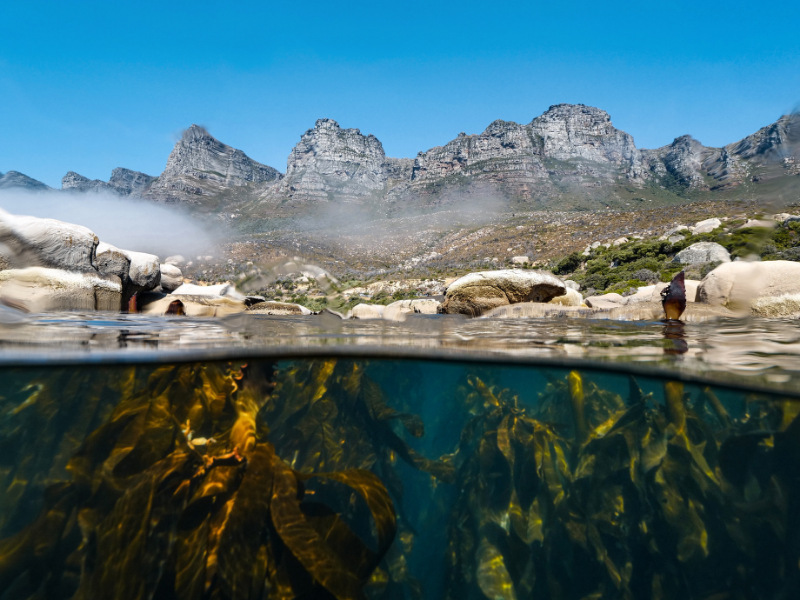
Along Cape Town’s shores, there lives a world beneath the waves. From the surface, kelp forests just look like floating, slimy plants, but once you submerge underneath, you will see an alien landscape come to life. In these kelp forests live over 14 000 documented species of marine animals.
Cape Town is one of the largest cities in South Africa and among the most multicultural in the world. It’s uniquely situated on the tip of Southern Africa, surrounded by the Atlantic and Indian Oceans. The Atlantic Ocean brings cold water upwards from the icy poles. In contrast, the Indian Ocean brings down warm water from the Mozambique channel. The meeting of these warm and cold-water masses has resulted in a vast diversity of life underwater.
Kelp (Ecklonia maxima), also known as sea bamboo, form underwater forests rising up to 15 m from the sea floor. They create a unique habitat to explore, acting as a refuge for smaller species of reef fish and shysharks.
Tips for marine life-spotting
You have all the gear ready, your mask, snorkel, fins and wetsuit packed. Now what? Here are some tips for learning how to spot the kelp forest locals.
- Check the diving conditions — Just like we experience different weather days on land, the ocean is the same. Using weather apps like windy.com will help make predictions on the best days to go explore.
- Research your dive site — With such a great diversity of life underneath the waters of Cape Town, you can expect to find them in various habitats! From cold water corals, being home to over 80 species of described nudibranchs to the thick kelp, hosting shelter to the 13+ species of sharks in our waters.
- Pick up a field guide — It’s always worth browsing the common species in an area before taking the plunge. Field guides are excellent, as they also tell you which habitats particular creatures are found in. This will help you know where to start looking. My favourite is the Two Oceans Guide.
- The kelp forest is home to numerous camouflaged critters, including some of the most interesting in the ocean, but spotting them can feel like a game of Where’s Waldo. Make sure to slow down. The slower you swim, the better chance you’ll have of spotting those camouflaged creatures waiting for you to pass by.
- Get low — Swimming close to the bottom and scanning the top of the reef line is a good way to spot sneaky fellows, such as octopuses, as they attempt to slink away unnoticed.
- Ask a local divemaster, they often know the locations of resident critters. Mention what you hope to see; chances are, the divemaster can take you right to it. You’ll also be helping to support local eco-tourism this way!
Editor’s note: You can get more marine life tips and inspiration from Danel on her Instagram page!
Common endemic marine life found in Cape Town
Cape Town’s underwater world is teaming with life. On a single dive, you can spot a great diversity of species, including octopi, crustaceans, sea fans, sponges, feather stars, brittle stars and interesting fish, like the klipfish (34 species have been described in Cape Town, most of them endemic). The Kelp forest is also home to several small sharks, including catshark and shyshark species, which use the kelp as a refuge from larger predators.
Cartilaginous fish (aka the sharks and rays)
Cartilaginous fish are fish that have a skeleton made of cartilage instead of bone! Sharks and rays are some of the most common of this type.
Pyjama shark
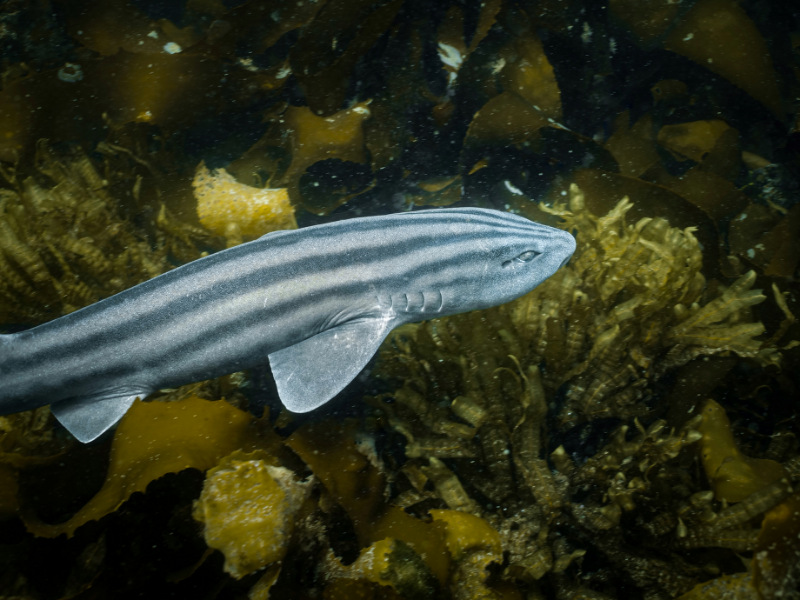
The pyjama catshark is a small but mighty shark found in the kelp forests and rocky reefs around Cape Town. This shark is named for its distinctive striped pattern, which resembles a pair of cosy pyjamas. But don’t let its cute appearance fool you – the pyjama catshark is a skilled hunter that can use its sharp teeth to prey on various small fish and invertebrates.
One of its unique adaptations is the ability to curl up its long, slender tail into a doughnut-shaped ball, which helps it hide from predators and squeeze into tight spaces.
Puffadder shyshark
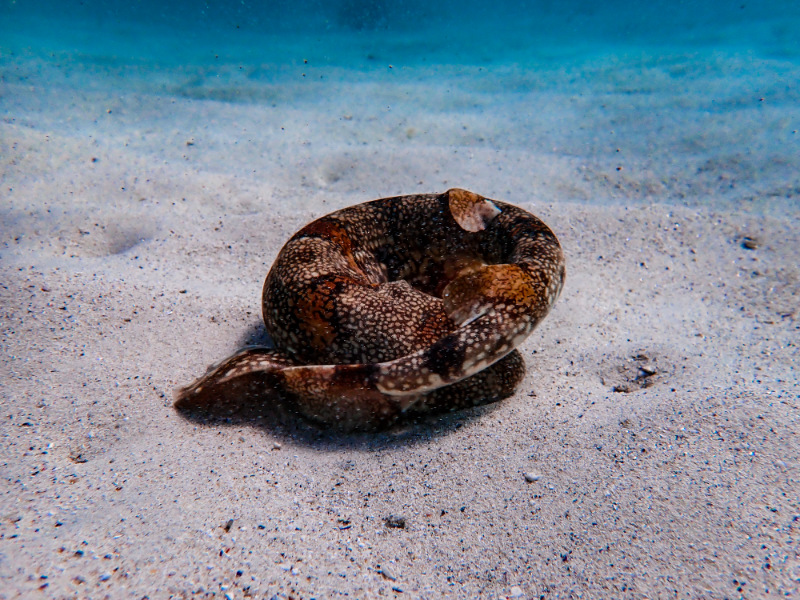
The puffadder shyshark is a master of camouflage, blending in perfectly with the rocky reefs and kelp forests where it lives. Their unusual markings – golden brown with reddish-brown saddles – resemble that of their namesake, the puffadder snake, an aggressive species also found in South Africa. But unlike their reptilian counterpart, the puffadder shyshark is pretty non-confrontational; they curl up into a doughnut when threatened!
Short-tail stingray
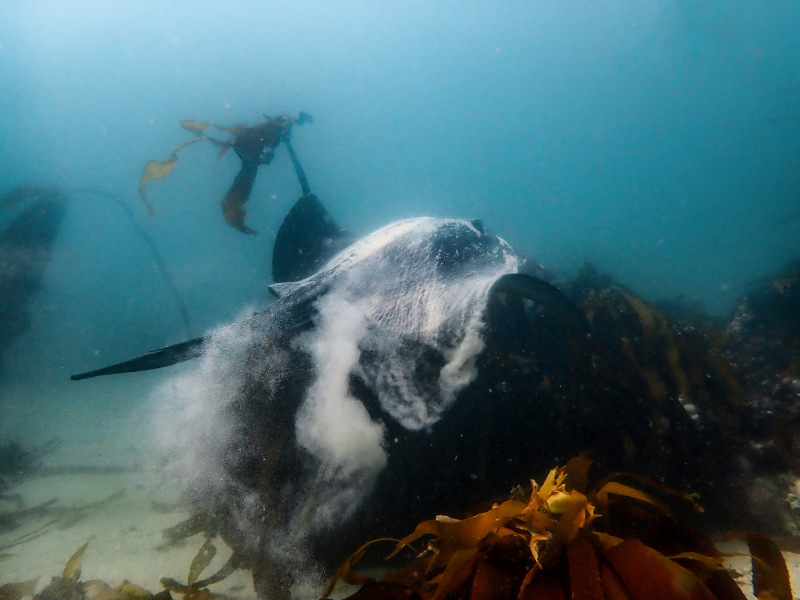
The short-tail stingray is a large and impressive ray found in shallow waters around Cape Town. This ray has a flattened, disc-like body that helps it blend in with the sandy seafloor and avoid detection by predators. One of its most unique features is its venomous barb, which it uses to defend itself from predators or to stun prey. But don’t worry – the short-tail stingray is generally not aggressive toward humans and would rather swim away than use its weapon.
Bony Fish
There are hundreds of bony fish species found in the temperate waters of Cape Town. I just included my three favourites, which are all quite awkward and unique in their own way. To see some more common fish, check out this blog post on the 20 common bony fish of False Bay and how to ID them.
Red roman
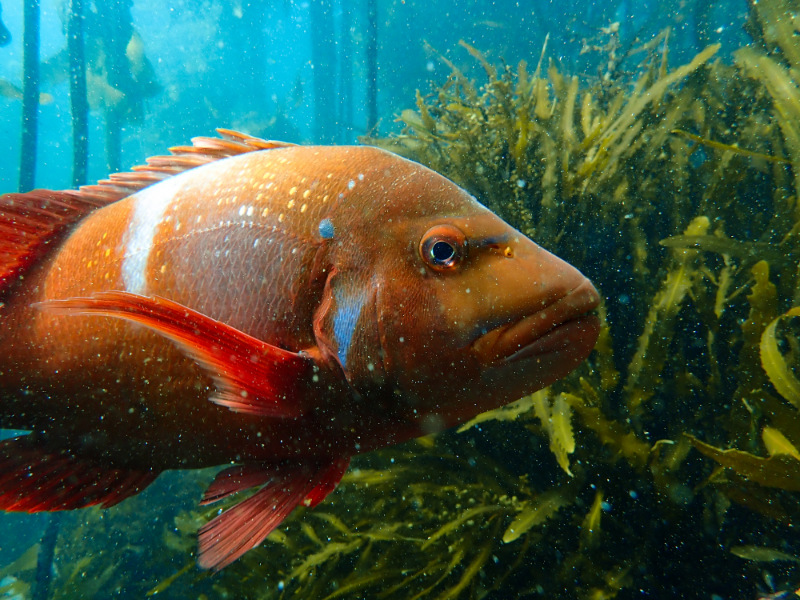
The red roman is a vibrant and colourful fish found in the rocky reefs and kelp forests around Cape Town. This fish has a distinctive red body with white spots and is often sought after by anglers for its delicious flesh. But the red roman is also an important predator in the marine ecosystem, feeding on various small fish and invertebrates. One of its unique features is its sharp teeth, which it uses to crush the hard shells of crustaceans and molluscs.
These fish are listed as ‘orange’ on the WWF SASSI endangered fish list. It’s better to think twice before purchasing a red roman at your local market.
Galjoen
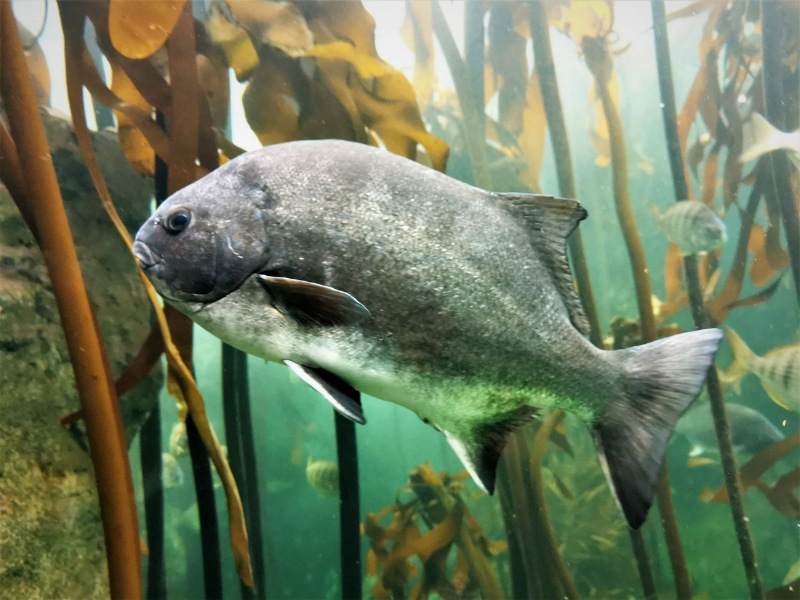
Image by Two Oceans Aquarium
The galjoen is a tough and adaptable fish well-suited to the South African coast’s rocky shoreline and turbulent waters. This fish is not only an important food source for coastal communities, but it is also a cultural icon — it was officially declared South Africa’s national fish in 2010. One of its most distinctive features is the ability to change colour depending on its surroundings, which helps it blend in with the rocky reef environment.
Longsnout Pipefish
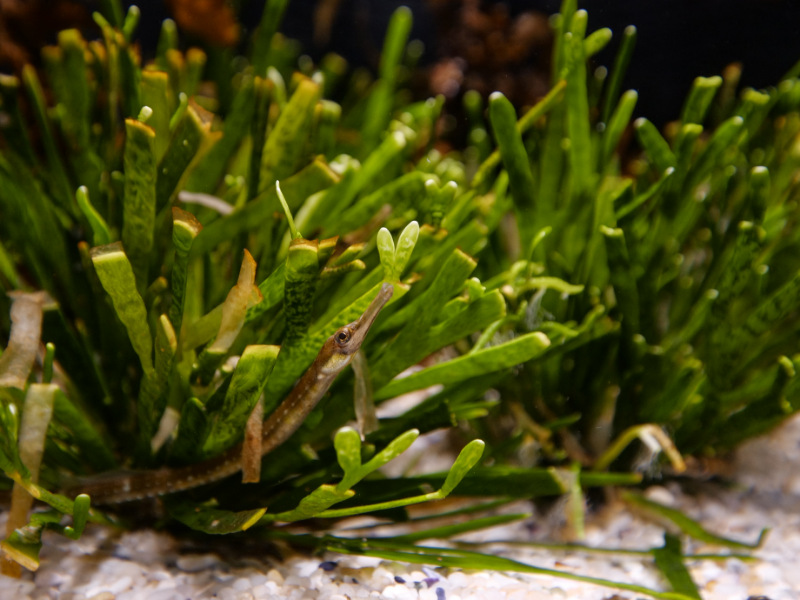
This small and delicate fish, measuring only up to 20cm in length, possesses a long, thin snout perfect for hunting small crustaceans and invertebrates. It’s often mistaken for a seahorse due to its similar appearance, but it has a much slimmer body and a straighter posture than a seahorse.
As with seahorses, it’s the male longsnout pipefish that carries and incubates the eggs until they hatch. However, unlike seahorses, they do not have a pouch, instead, they use their tail to wrap around the eggs to protect and nurture them. One of the longsnout pipefish’s remarkable features is its ability to change colour and pattern to match its surroundings, providing excellent camouflage that makes it almost invisible to predators and prey.
Mammals
The diversity of large marine mammals in South African waters is remarkable, with over 40 species that depend on our rich coastal and open ocean ecosystems. The seas near Cape Town support the widest diversity, including five species of dolphin and three species of baleen whale, as it is the boundary between the cold Benguela ecosystem and the warmer Agulhas Current. The close continental shelf around Cape Town also means that some deep-water species, like pilot whales, are occasionally seen.
For more information about whale and dolphin research in South Africa, visit Sea Search.
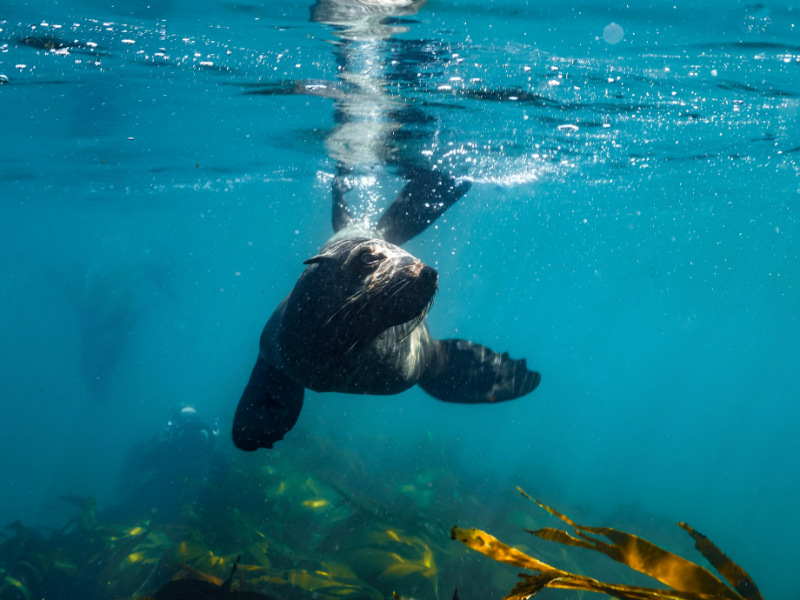
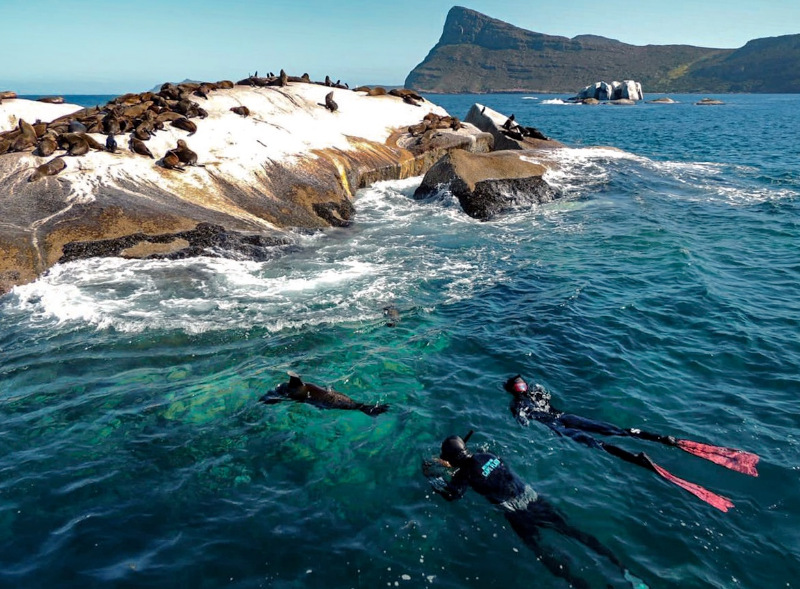
Cape fur seal