
Birdwatching is fast becoming a very popular pastime among nature lovers. Once thought to be exclusively the interest of old or upper-class men, it has now spread to millions of people around the world, especially in the last 40 years or so, creating a global community. Cape Town is a major epicentre for birders in South Africa. Even the Percy Fitzpatrick Institute of African Ornithology has its offices at the University of Cape Town!
While Cape Town lacks the bird-rich savannas and forests of Limpopo or Kwa-Zulu Natal, it is home to a large number of unique and endemic species and a range of iconic land and seabirds. Alongside the veteran birders, more and more people are becoming inspired to pick up a pair of binoculars or a camera and go in search of these birds.
Luckily, in Cape Town, you don’t need to travel far to visit birding hotspots like Kirstenbosch Gardens or Strandfontein. Even visiting a local park, a stretch of coastline or sitting in your own backyard can offer some memorable birding moments. The bird species in Cape Town are well adapted to their particular environments, but many have also managed to cope with the changes brought about by urbanisation. So the birds are now coming to the birders.
Birding tips
- Look for greenspaces in your neighbourhood (parks, rivers, wetlands, plantations, fynbos)
- Listen out for bird calls, as many species can be located by following their calls
- Try to make your garden as wildlife-friendly as possible (indigenous vegetation, areas of thicket, wood piles)
- Be mindful when installing bird feeders. While these are great at attracting birds to your garden, they can also have negative effects. For example, the wrong mixture in a sunbird feeder can kill the visiting birds. In addition, don’t rely solely on bird feeders to attract birds
- If a bird has made a nest, be very careful not to disturb the birds when observing it
- Try and make a list or keep notes of the birds you see in your garden and your area
27 beautiful common birds in Cape Town
These are some of the best native birds to watch for in the city – they can be found in gardens, along the coast, and on the slopes of the expansive Table Mountain National Park.
Looking for more? Check out our post on the best bird-watching spots around Cape Town!
Cape Sugarbird
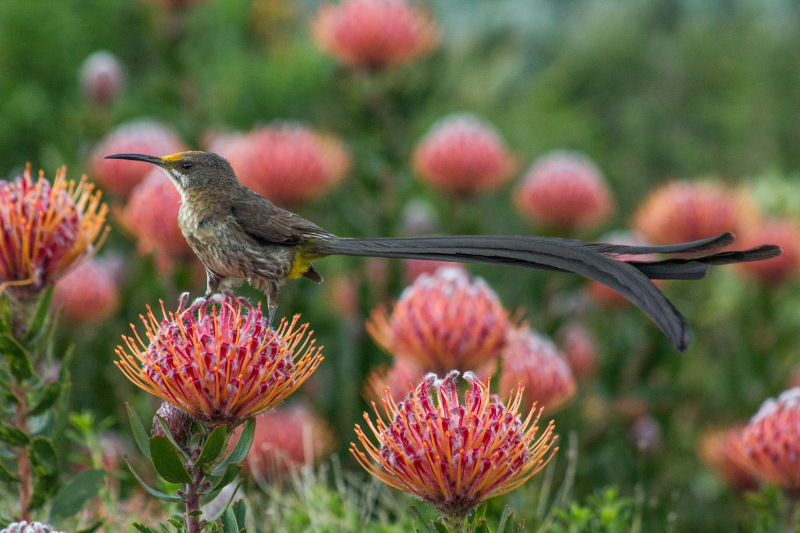
Endemic to the fynbos biome in the Western and Eastern Cape, the Cape sugarbird is one of the most easily recognisable birds that can be seen in the Table Mountain National Park. The long tail feathers of the male birds are used in the display flights that they do to impress the females, showing their strength and vigour.
They rely heavily on mature fynbos to survive, so they can feed on the nectar of specific protea species (including the King Protea, South Africa’s National Flower), but they do visit gardens in the suburbs close to the mountains, including Kalk Bay and Noordhoek.
Orange-breasted Sunbird
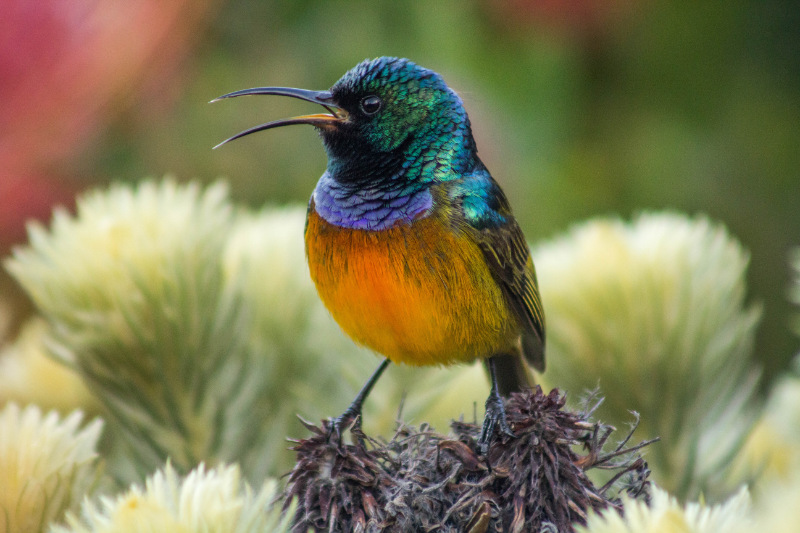
In my opinion, this species is the most extravagantly coloured of all the sunbirds in Southern Africa. Like the Cape sugarbird, they are also endemic to the fynbos biome and feed on the nectar of certain species of ericas and proteas. In fact, several species of erica are specifically designed to be pollinated by these sunbirds!
It is not common to see these sunbirds in gardens, due to them being more reliant on healthy fynbos than other sunbird species, but they do enter gardens close to the foot of the mountains. The best time of year to see the orange-breasted sunbird is at the start of spring, when pincushion proteas flower, and in the first months of the year when a number of key erica species flower.
If you want to attract sunbirds and sugarbirds, check out our guide on how to grow a fynbos garden!
Verreaux’s Eagle
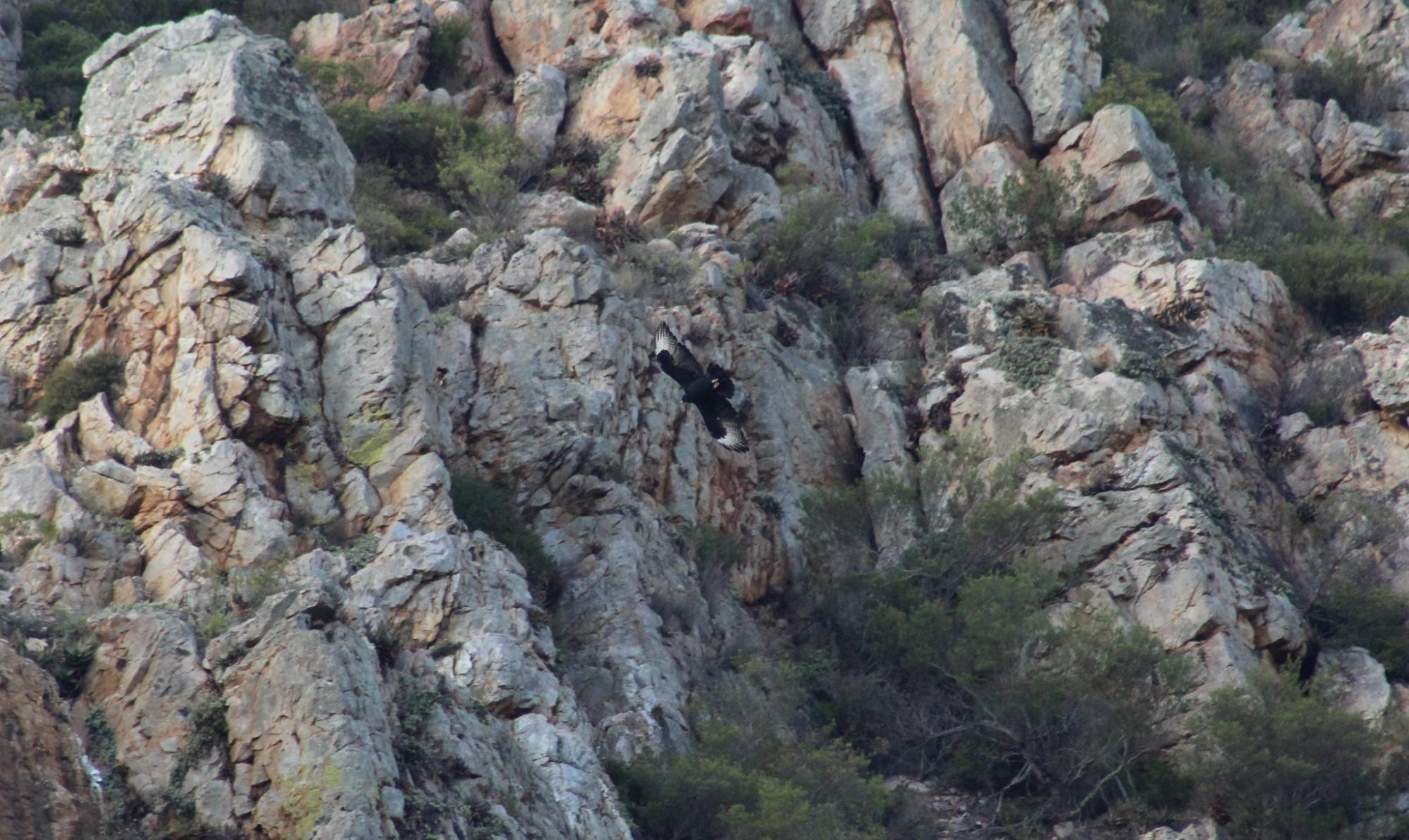
The Verreaux’s eagle is a symbol of South Africa’s mountain ranges, as well as the favourite raptor of many birders (myself included). They can be found in mountain ranges across Southern and East Africa, from the Cape Fold Mountains to the Ethiopian Highlands. They can usually be seen soaring high on thermals, the white patches near the tips of their wings and the white v-shape on their back being key identifying features.
They are apex predators, predominantly hunting dassies, but also other prey like monkeys and game birds. Given their size, they require large territories in order to find enough prey to survive. A breeding pair can range over an area of up to 28 square kilometres. In Cape Town, there used to be a number of pairs of eagles but now only one breeding pair remains. Their nest can be viewed from a specific trail on the Noordhoek-facing side of Silvermine Nature Reserve. Around Cape Town, they typically occur in mountainous areas like Rooeils, Jonkershoek Nature Reserve and the Kogelberg.
African Penguin
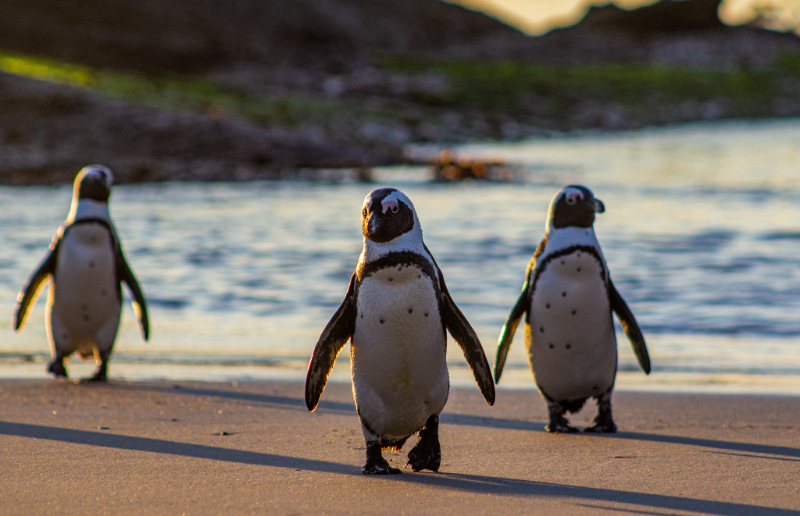
One of South Africa’s most iconic birds, the African penguins of Boulders Beach in Simon’s Town have become one of the biggest drawcards for tourists visiting South Africa. With up to 2000 resident breeding pairs, Boulders Beach is one of the most important colonies for this increasingly endangered species.
With space often limited, a number of the houses surrounding the beach are now visited by penguins looking for places to nest. It’s not uncommon to see groups of penguins crossing the roads in Simon’s Town (look out for penguin crossing signs). When not on land, these birds travel far out into the open ocean in search of the fish they hunt and can dive to depths of over 100 metres.
Black Harrier
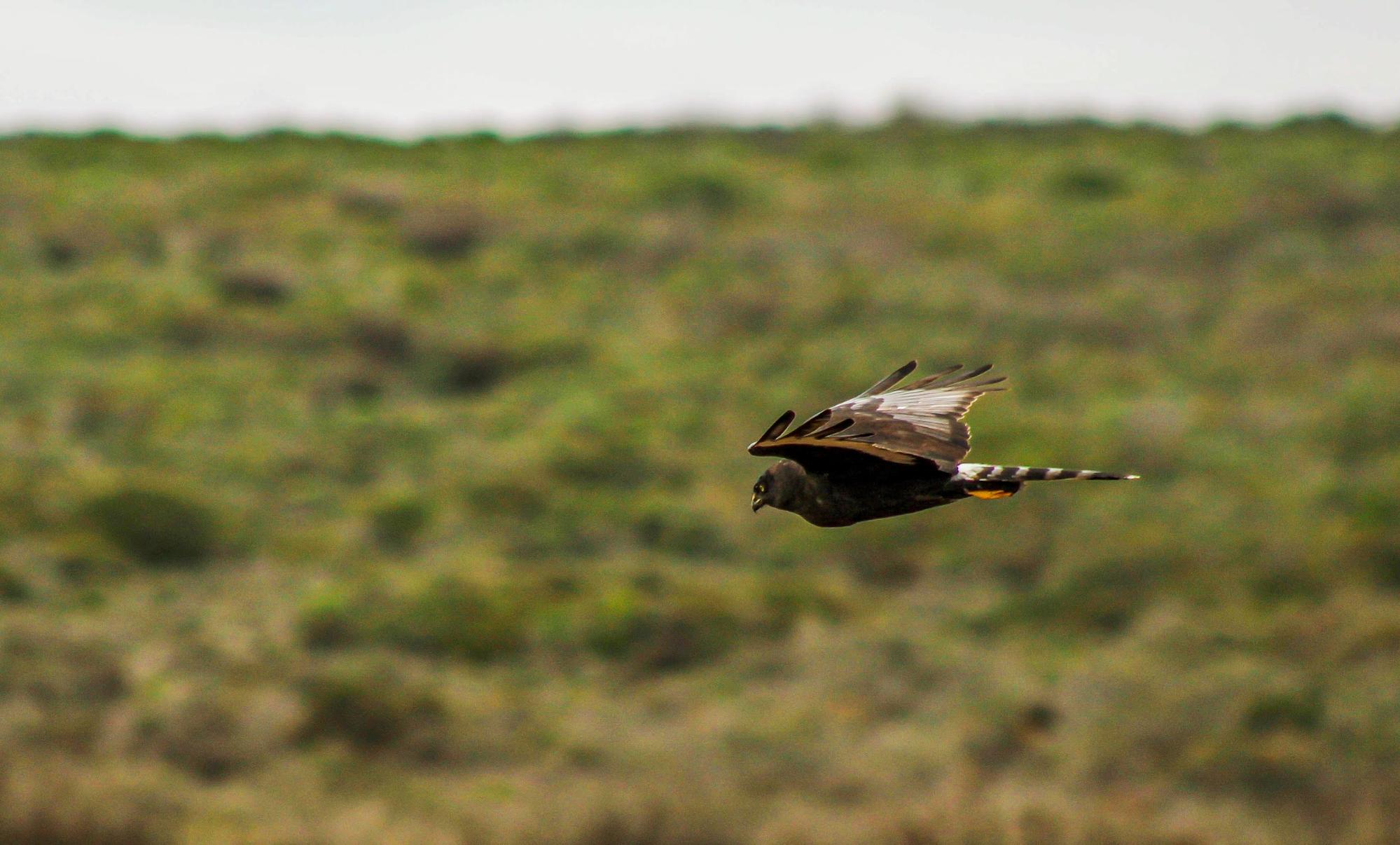
The Black Harrier is probably the most striking bird of prey that can be seen close to Cape Town and yet it is also one of the most threatened and range-restricted raptors in the Western Cape. Agriculture and urbanisation has eaten away at the natural fynbos and Karoo scrub where the harriers hunt and breed.
Unlike other raptor species, harriers nest on the ground and require large areas of natural vegetation in order to breed successfully. They can often be seen flying low over the landscape in search of prey, which is primarily rodents and small birds. Their main stronghold close to Cape Town is the West Coast National Park, which has a large enough area of natural fynbos within and surrounding it to support a viable breeding population.
African Black Oystercatcher
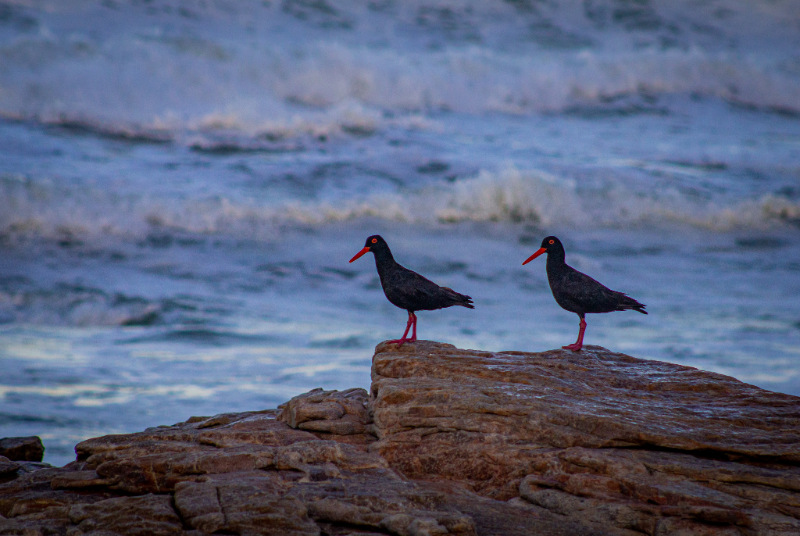
The African black oystercatcher is another iconic bird of South Africa’s shorelines. Jet black with a strikingly red bill and eye-rings, they are easily recognisable. Formerly endangered, they’ve been making an impressive comeback thanks to conservation efforts.
Oystercatchers can be seen foraging for shellfish in any place along Cape Town’s coastline and they nest in the dunes on certain beaches, which need to be protected from people, dogs and cars.
Malachite Kingfisher
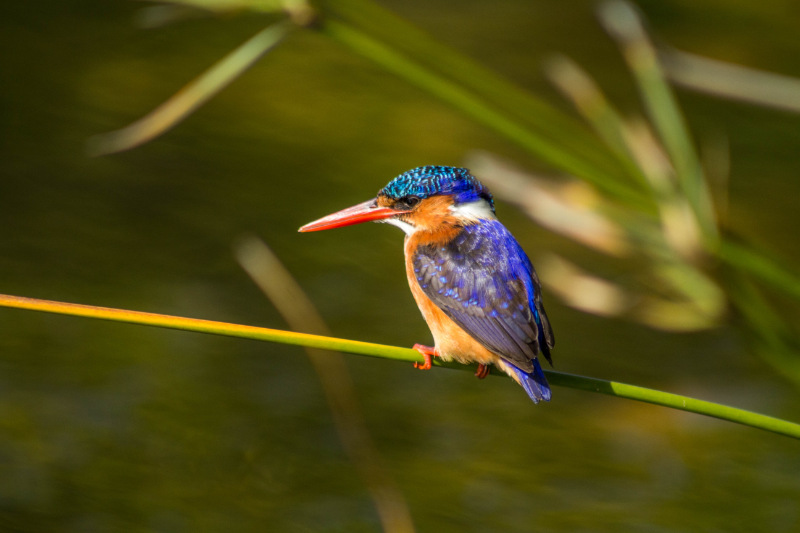
A favourite bird among photographers, this tiny bejewelled kingfisher is a common sight across South Africa’s wetlands and waterways. While they prefer natural wetlands, they can also be seen deep in urban areas in places like Greenpoint Park and the Liesbeek River. When in flight, these birds look like tiny blue darts and it is a special moment when you get a close look at one perched on a reed.
Shy Albatross
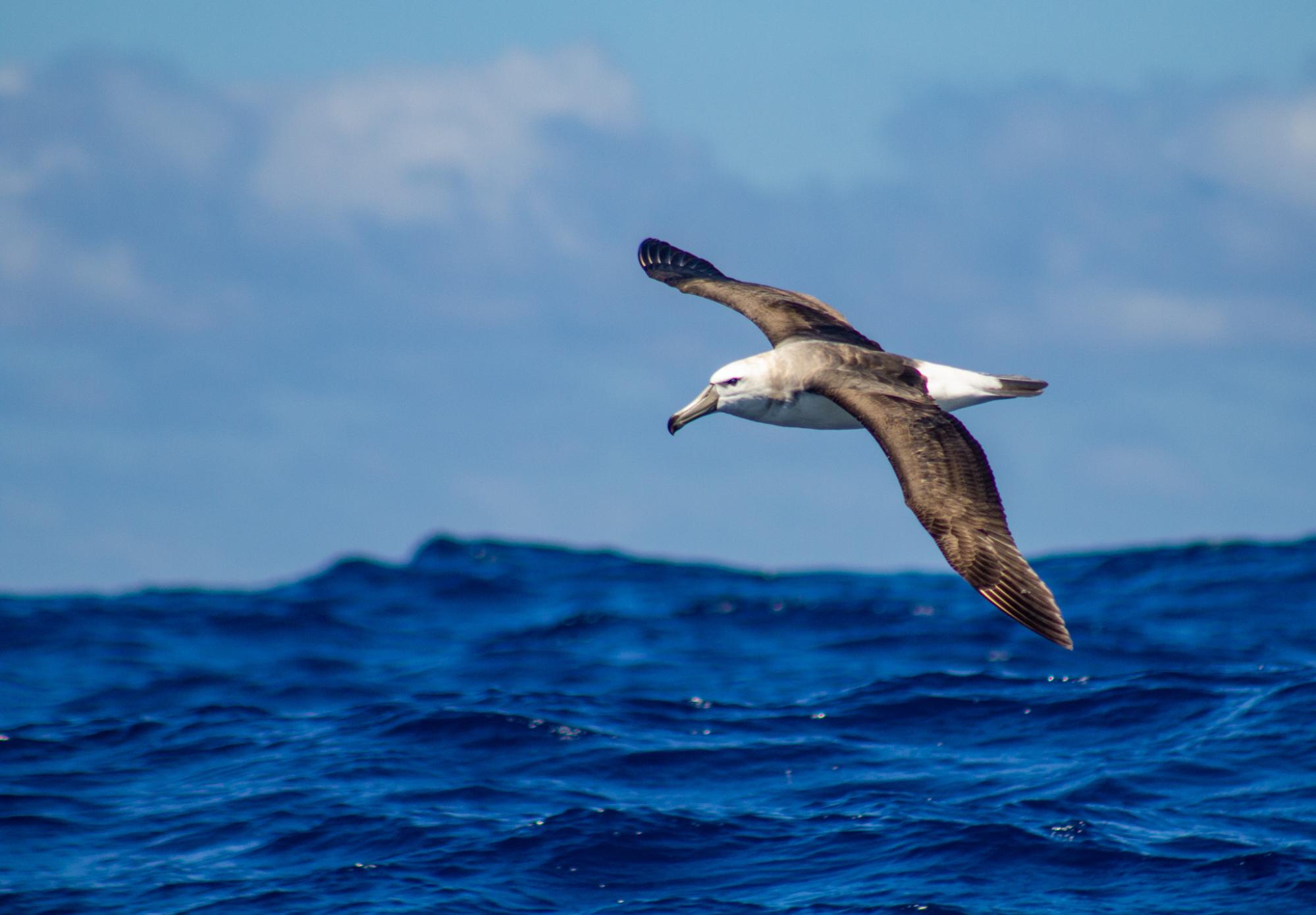
The ocean south of Cape Point is considered to be the best place in the world for pelagic birding, and albatrosses are perhaps the most sought-after species by birdwatchers. A number of albatross species can be seen off Cape Point, and one of the most common is the shy albatross.
Shy albatrosses breed on remote islands off the coast of Tasmania, but juveniles and non-breeding adults range across huge areas of ocean in search of food. While they are one of the smaller species of albatross, they are still impressive birds with a wingspan of up to 2.5 metres! They hunt for fish and crustaceans, sometimes diving to depths of 5 metres to catch them.
In their search for food, they will often follow fishing vessels which puts them at risk of getting entangled in fishing gear (a threat facing many other species of seabird too).